
Planning commercial Christmas lighting is a mix of design intent, safety engineering, and procurement discipline. The fastest path to a smooth season is to lock site measurements early, align the concept to your brand experience, and build a budget that includes access equipment, power distribution, controls, labor, and contingency. This guide helps parks, malls, and public venues deliver reliable outdoor decorative lights at scale.
Video Guide: This walkthrough helps you understand the end-to-end workflow (scoping, quoting mindset, materials, and execution) you can adapt to commercial Christmas lighting projects.
What is Commercial Christmas Lighting?
Commercial Christmas Lighting is a professionally designed and installed seasonal display for public or business properties—such as malls, parks, streetscapes, and campuses—using durable outdoor holiday lights, structural décor, and power/control systems built for safety, uptime, and visual impact. It prioritizes compliance, weather resistance, and maintainability over one-off residential styling.
Video Guide: Use this as a general primer on how professional lighting services define scope, materials, and operations—useful context when specifying commercial-grade displays.
Where it’s used and what it includes
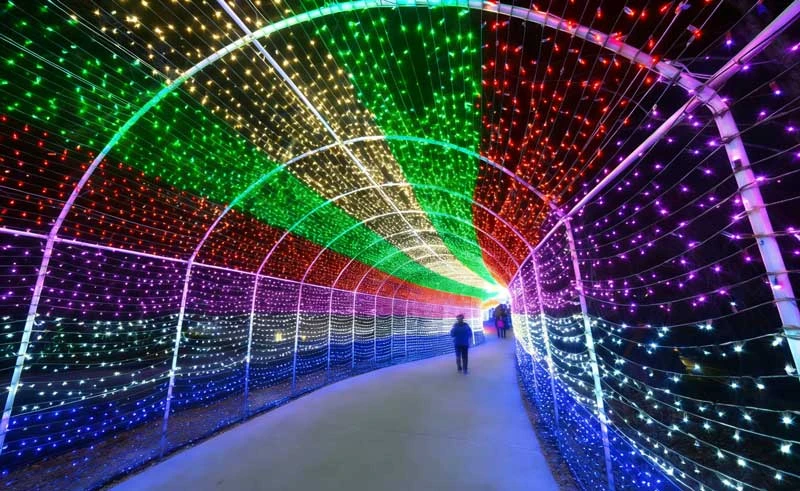
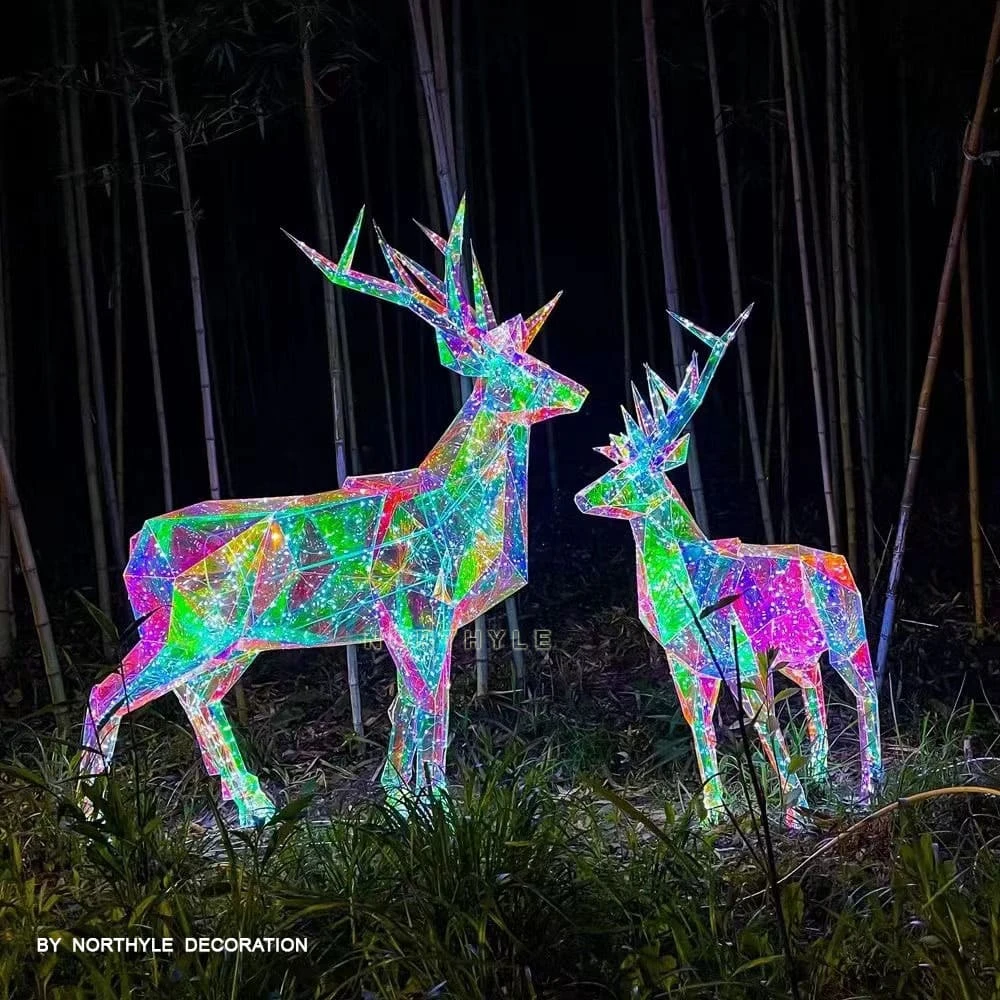
Commercial Christmas lighting typically combines fixed-mounted light strings, architectural outlining, trees wraps, 3D motifs, and animated elements with centralized control and documented electrical planning.
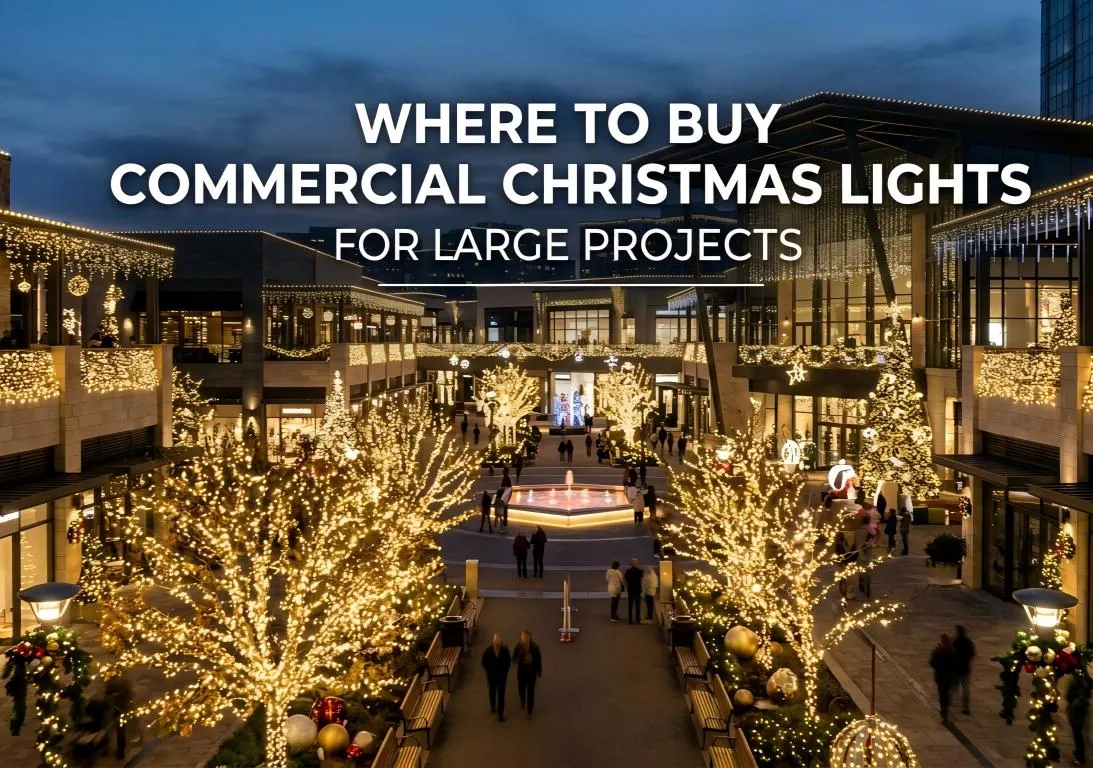
- Common sites: malls, outdoor holiday lights for park pathways, plazas, façades, parking-lot poles, atriums, and event districts
- Typical components: LED strings, rope light, net lights, pixel nodes, power supplies, timers/photocells, controllers, mounting hardware, and weatherproof cabling
- Success criteria: safe load management, consistent color temperature, uniform brightness, serviceability, and a clean daytime appearance
NORTHYLE Pro Tip: When stakeholders say “make it brighter,” I translate that into measurable targets—lux/visibility zones, viewing distances, and façade coverage—then specify fixture density and wattage so the result is predictable (and budgetable).
How Does Commercial Christmas Lighting Work?
Commercial Christmas Lighting works by distributing safe, weather-rated power to outdoor decorative lights and décor zones, then controlling on/off schedules or animations through timers, photocells, or DMX/pixel controllers. A site plan maps circuits, loads, and mounting points, ensuring each run stays within voltage-drop and amperage limits for consistent brightness and reliable operation.
Video Guide: This video helps you think about calculating bids and scope—useful for translating circuit counts, linear footage, and labor into a structured commercial plan.
From concept to energized display (technical flow)
- Survey & measure: façade lines, trees, poles, railings, rooflines, and pedestrian sightlines
- Zoning: split the site into logical lighting zones (entry, anchor storefronts, main tree, walkway canopy)
- Electrical plan: identify available panels, GFCI protection, permissible loads, and routing for feeders/extensions
- Equipment selection: LED type (string vs pixel), IP rating, cable gauge, connectors, mounting method
- Controls: timer/photocell for static displays; controller + programming for animated sequences
- Install & test: stage-by-stage energizing, night aiming check, thermal/connection inspection
- Operate & maintain: scheduled checks, rapid swap strategy, post-season takedown and inventory
NORTHYLE Pro Tip: I always design “service loops” and label every run at both ends; when a single zone flickers during peak hours, that labeling can turn a 2-hour hunt into a 10-minute fix.
What are the benefits of Commercial Christmas Lighting?
Commercial Christmas Lighting increases foot traffic, dwell time, and brand recall by turning your property into a seasonal destination. For parks and malls, it supports events and sponsorship activation while improving nighttime ambience and perceived safety. Professionally engineered outdoor holiday lights also reduce outage risk and simplify maintenance versus ad-hoc installs.
Video Guide: While oriented around quoting, it clarifies what creates value (complexity, access, materials, and reliability)—helpful when communicating benefits to decision-makers.
Benefits that matter to owners, operators, and guests
- Commercial impact: higher visitation, stronger tenant satisfaction, and social-media amplification
- Operational reliability: fewer failures through better connectors, strain relief, and load planning
- Risk reduction: documented electrical approach, safer access methods, and cleaner cable management
- Reusability: modular décor and standardized parts reduce future seasons’ costs
- Experience design: consistent color, brightness, and storytelling across the site
NORTHYLE Pro Tip: I treat “Instagrammable moments” as deliverables—define 3–5 photo hotspots (main tree, archway, façade outline, interactive element) and make sure each has dedicated power, clean cable paths, and the highest redundancy.
How to maintain a Commercial Christmas Lighting?
Maintaining Commercial Christmas Lighting means routine nighttime inspections, proactive replacement of high-failure items, and rapid-response troubleshooting for power, connectors, and damaged runs. A maintenance plan should include zone labeling, spare inventory, weatherproofing checks, and scheduled adjustments after storms, ensuring outdoor decorative lights stay consistent throughout the season.
Video Guide: This tips-style video helps you build practical habits (checklists, troubleshooting mindset, and operational discipline) that translate well to commercial maintenance routines.
Maintenance checklist and service cadence
- Daily/weekly checks (in-season):
- Walk the site after full dark; note dim zones, flicker, and color mismatch
- Verify timers/photocells and controller schedules
- Spot-check high-traffic areas for cable strain or tampering
- After weather events:
- Inspect connections for moisture ingress
- Re-seat connectors and confirm GFCI stability
- Check mounting points for wind movement
- Spare parts strategy:
- Keep spare strings by color temperature, connectors, fuses, controllers, and power supplies
- Pre-build replacement sections for fastest swaps
- Documentation:
- Update zone maps, circuit IDs, and “as-built” photos for next season
NORTHYLE Pro Tip: I keep a “top 20 spares bin” on every commercial job—matched strings, known-good power supplies, and labeled connectors—because the cost of one dark entryway on a Saturday can exceed the cost of the entire spares kit.
What is the price of Commercial Christmas Lighting?
Commercial Christmas Lighting pricing is driven by linear footage, tree quantity/height, décor complexity, access difficulty (lifts vs rope access), control/animation needs, and electrical readiness. Budgets typically include materials, installation labor, equipment rental, permits/insurance, maintenance, and takedown. Clear zoning and measurements are the fastest way to get accurate supplier quotes.
Video Guide: This business-focused video helps frame how professionals build revenue and scope—useful when structuring commercial pricing into measurable units and service packages.
Typical budget line items (what to include)
- Materials: LED strings/pixels, motifs, garland/wreaths, mounting hardware, cable management
- Electrical & controls: feeders, GFCI protection, timers/photocells, controllers, power supplies
- Labor: install, testing/commissioning, on-call maintenance visits, takedown
- Access: boom/scissor lift rental, traffic control, after-hours premiums
- Compliance: permits, engineering for large structures (if required), insurance documentation
- Contingency: 5–15% depending on weather exposure and complexity
NORTHYLE Pro Tip: When I price commercial work, I separate “display cost” from “operations cost” (maintenance + callouts). Owners approve faster because they can see what’s capital-like (reusable décor) versus seasonal service.
Key Features & Comparison
Commercial Christmas Lighting stands out through commercial-grade weatherproofing, scalable power distribution, standardized connectors, and service-friendly zoning. Compared with consumer outdoor holiday lights, it’s designed for continuous runtime, higher footfall environments, and quicker field repairs. The right feature set depends on whether you’re outlining architecture, lighting trees, or building photo-moment installations.
Video Guide: Use this for a broad look at professional setup and operational thinking, then apply the same discipline to feature selection and serviceability on commercial sites.
Specification comparison for commercial applications
Based on our internal data and market analysis, here is the breakdown:
| Feature | Commercial-grade solution | Consumer-grade solution | Why it matters for parks/malls |
|---|---|---|---|
| Weather rating | IP65+ elements, sealed connectors | Mixed ratings, often less sealed | Rain/snow resistance and fewer outages |
| Wiring & connectors | Standardized, strain-relieved, serviceable | Varies widely, less robust | Faster troubleshooting and safer routing |
| Power planning | Load maps, zones, controlled circuits | Ad-hoc extension chaining | Prevents nuisance trips and dimming |
| Control options | Timers, photocells, DMX/pixel control | Basic timer plugs | Supports scheduled shows and events |
| Mounting method | Engineered clips, tracks, wrap techniques | Temporary hooks/tape | Cleaner daytime look and reduced damage |
| Maintenance model | Labeled runs, spares, swap modules | Replace-as-fail | Minimizes downtime during peak visits |
| Safety & compliance | Site documentation, access planning | Limited documentation | Reduces liability and improves approvals |
| Scalability | Modular expansions year-to-year | Limited | Easier to grow the display annually |
NORTHYLE Pro Tip: I standardize on a small set of connector types and color temperatures across the entire property; it prevents “patchwork” repairs and keeps the display visually consistent in photos.
Cost & Buying Factors
To buy Commercial Christmas Lighting efficiently, convert the design into measurable quantities (linear meters, tree wraps, motif counts, zones) and decide what you will own versus rent or service annually. Supplier selection should prioritize consistent LED binning, weatherproof connectors, documentation, lead times, and after-sales support—especially for outdoor holiday lights for park and mall environments.
Video Guide: This “avoid mistakes” style guide helps you pressure-test vendors, scope, and operational decisions that often cause overruns in real installs.
What to evaluate before choosing a supplier (NORTHYLE-ready checklist)
- Scope clarity: drawings, measurements, zone list, operating hours, and install windows
- Product fit: LED type (static vs pixel), Kelvin/color consistency, brightness, wire color, IP rating
- Electrical readiness: available circuits, distances, routing paths, and GFCI approach
- Access constraints: lift reach, ground conditions, traffic management, nighttime work rules
- Service plan: response time, spare parts availability, and modular replacement strategy
- Logistics: lead time, packing list accuracy, labeling, and replacement part SKUs
- Total cost: include maintenance, takedown, storage, and refurbishment (not just purchase price)
Buying model comparison (own vs seasonal service)
| Model | Best for | Pros | Watch-outs |
|---|---|---|---|
| Purchase & self-install | Venues with internal facilities team | Lower long-run cost, asset control | Needs training, storage, testing process |
| Purchase + contracted install | Stable annual concept | Reusable inventory + pro labor | Ensure compatibility and labeling standards |
| Full-service seasonal (rent/service) | High-change concepts, limited staff | Predictable operations, faster refresh | Confirm what happens during outages and damage |
| Hybrid (core owned + featured rented) | Malls/parks with signature zones | Stable identity + fresh highlights | Integration planning for power/control needed |
NORTHYLE Pro Tip: I ask vendors for a labeled sample kit (string + connector + power supply + mounting) before committing; if the sample isn’t easy to install, service, and replace, scaling it across a mall or park will amplify every small pain point.
Conclusion
A successful commercial Christmas lighting project is won in the planning: measure early, zone the site, engineer power and controls, and choose weather-rated, serviceable products for high-traffic outdoor environments. If you want a display that’s bright, consistent, and easy to maintain across parks and malls, NORTHYLE can help you translate a concept into a bill of materials, budget, and supplier-ready specification.


 EN
EN  AR
AR  DE
DE  JA
JA  FR
FR  ES
ES  PT
PT  RU
RU