
Landscape lighting has evolved from basic security illumination into a strategic design discipline that shapes how people experience outdoor spaces after dark. In commercial environments—from resort pathways to urban plazas—properly engineered lighting systems don’t just illuminate; they guide movement, create emotional responses, and transform architecture and nature into nighttime destinations. With over 1,000 lighting designs developed for commercial outdoor applications across shopping districts, theme parks, and hospitality venues, we’ve learned that successful landscape lighting balances technical precision with artistic vision, requiring both electrical engineering knowledge and an understanding of how light interacts with materials, plants, and human perception.
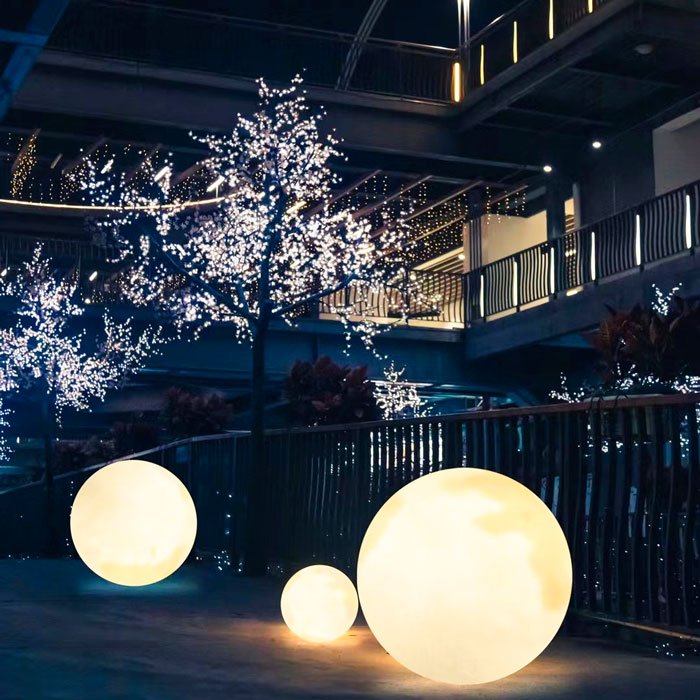
What is commercial landscape lighting?
Commercial landscape lighting refers to professionally engineered outdoor illumination systems designed for public and business environments including resorts, shopping centers, parks, hotels, and municipal spaces. Unlike residential systems, these installations must withstand heavy foot traffic, meet stringent safety codes, operate reliably across large areas, and create specific atmospheric effects that support business objectives such as extending visitor hours, enhancing brand perception, or improving wayfinding.
Defining Characteristics in Professional Applications
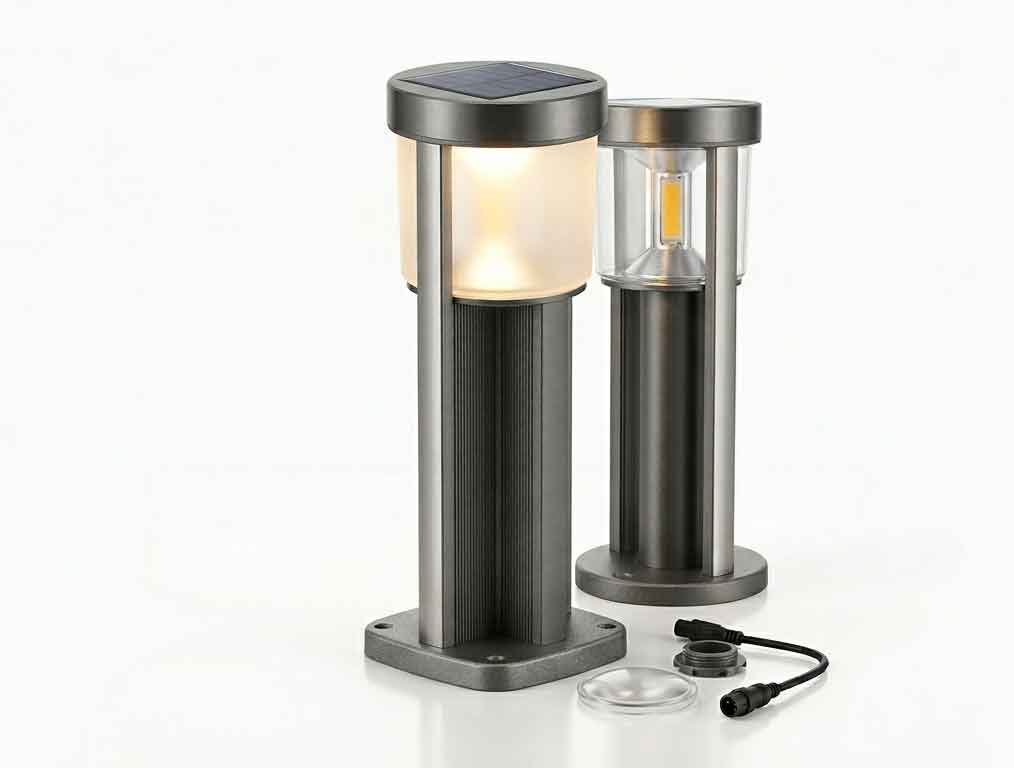
Commercial landscape lighting encompasses multiple fixture types and design strategies working together as an integrated system. We typically deploy pathway lights for pedestrian guidance, uplights to emphasize architectural features or specimen trees, accent fixtures for focal points like sculptures or water features, and ambient wash lighting to define spatial boundaries. The distinction from residential lighting lies in scale, durability requirements, and design intent—these systems must perform flawlessly for years with minimal maintenance while handling environmental extremes from coastal salt exposure to desert heat.
In our project work, we’ve identified three critical layers that define professional landscape lighting: functional illumination ensuring safe navigation, aesthetic lighting creating visual interest and atmosphere, and strategic lighting directing attention and movement patterns. A resort property might use warm 2700K pathway lighting at 3-5 foot-candles for safe walking, while simultaneously deploying narrow-beam 3000K uplights on palm trees and colored accent lighting on water features. The system operates as a cohesive design rather than isolated fixtures.
| Project Type | Primary Lighting Goals | Typical Fixture Count | Average Wattage per Fixture |
|---|---|---|---|
| Shopping Mall Exterior | Brand visibility, safety, extended shopping hours | 200-800 | 15-50W |
| Resort Property | Atmosphere, wayfinding, landscape features | 500-2000 | 8-35W |
| Public Park | Safety, pathway definition, tree illumination | 150-600 | 20-60W |
| Theme Park Zone | Theming, crowd flow, immersive experience | 300-1500 | 10-80W |
| Hotel Entrance & Grounds | Luxury perception, architectural emphasis | 100-400 | 12-45W |
NORTHYLE Pro Tip: When specifying commercial landscape lighting, always request photometric data showing actual light distribution patterns rather than relying on lumen output alone. We’ve replaced numerous failed installations where contractors selected fixtures based solely on brightness specifications without considering beam angle, resulting in harsh hotspots or inadequate coverage. For pathway lighting, we recommend fixtures with asymmetric distribution patterns that direct light downward and forward rather than symmetric patterns that waste energy illuminating adjacent planting beds.
How Does commercial landscape lighting Work?
Commercial landscape lighting systems operate through low-voltage or line-voltage electrical networks that distribute power to strategically positioned fixtures, which use LED sources to convert electricity into controlled light output. The system architecture includes transformers or drivers that regulate voltage, control systems managing timing and dimming functions, and fixture housings protecting components from weather while directing light through lenses and reflectors to achieve specific beam patterns and intensities.
System Architecture and Power Distribution
The electrical foundation determines system reliability and performance. Most commercial installations use centralized transformer stations feeding multiple lighting zones through underground conduit systems. We typically design circuits with voltage drop calculations limiting loss to 3% maximum—on a 500-foot cable run carrying 10 amps, this requires specific wire gauge selection to prevent dimming at distant fixtures. In a recent resort project spanning 8 acres, we installed four 3000W transformers positioned strategically to keep circuit runs under 300 feet, with each transformer serving 40-60 fixtures depending on wattage.
Line-voltage systems (120V or 277V) offer advantages for large-scale installations with long distances between fixtures, eliminating voltage drop concerns but requiring licensed electrician installation and more robust safety protocols. Low-voltage systems (12V or 24V) provide safer installation options and easier modifications but demand careful circuit design. We’ve encountered numerous retrofit projects where original low-voltage systems failed because designers didn’t account for cumulative voltage drop—fixtures at circuit ends operated at 9V instead of 12V, producing dim, color-shifted light.
Control systems have evolved from simple timers to sophisticated DMX and smart lighting platforms. Astronomical timers adjust automatically for seasonal sunset variations, while photocells respond to ambient conditions. For dynamic installations like themed environments or holiday displays, we integrate DMX controllers enabling color changing, sequencing, and synchronized effects across hundreds of fixtures. A shopping center project we completed uses a centralized control system managing 600 fixtures across 12 zones, with scheduling that adjusts intensity throughout evening hours—full brightness during peak shopping times, reduced to 40% after closing for security illumination.
- Power Supply Stage: Electrical service feeds dedicated landscape lighting panels with appropriate circuit protection and GFCI requirements per local codes
- Transformation Stage: Transformers or LED drivers convert incoming voltage to fixture requirements while providing overcurrent protection
- Distribution Stage: Underground-rated cables (typically direct burial or conduit-enclosed) carry power to fixture locations following engineered circuit layouts
- Fixture Stage: LED modules within weatherproof housings convert electrical energy to light, with optics shaping beam patterns
- Control Stage: Timers, controllers, or building management systems regulate operation schedules and intensity levels
NORTHYLE Pro Tip: Always install accessible junction boxes at strategic points rather than direct-burying all connections. We learned this after a theme park installation where a cable fault required excavating 80 feet of landscaping to locate the failure point. Now we place waterproof junction boxes every 100-150 feet, which adds minimal cost during installation but saves thousands in troubleshooting and repair expenses. Mark junction box locations on as-built drawings with GPS coordinates—landscape changes over time make visual identification difficult.
What are the benefits of commercial landscape lighting?
Commercial landscape lighting delivers measurable business value by extending usable hours for outdoor spaces, enhancing perceived property value and brand image, improving safety and security to reduce liability, creating memorable visitor experiences that increase dwell time and spending, and differentiating properties in competitive markets. Professional installations typically show ROI through increased evening revenue, reduced security incidents, and enhanced customer satisfaction metrics.
Quantifiable Business and Operational Advantages
Extended operational hours represent the most direct financial benefit. A resort restaurant with illuminated patio seating can serve dinner guests until 10 PM instead of closing at sunset, potentially increasing daily revenue by 30-40% during peak seasons. Shopping centers with well-lit pedestrian zones see extended evening traffic, with retailers reporting sales increases of 15-25% during holiday seasons when decorative lighting creates destination appeal. We’ve worked with municipal parks that transformed from daytime-only facilities to evening attractions, with visitor counts doubling after implementing comprehensive lighting systems.
Safety improvements reduce both accident liability and security costs. Properly illuminated pathways decrease trip-and-fall incidents—insurance data shows well-lit commercial properties experience 60% fewer liability claims than poorly lit equivalents. Adequate lighting also deters criminal activity; parking areas and building perimeters with maintained illumination averaging 5-10 foot-candles show significantly lower vandalism and theft rates. A hotel client reported a 70% reduction in parking lot incidents after upgrading from sporadic lighting to comprehensive coverage meeting IES recommendations.
The atmospheric and experiential benefits influence customer behavior in measurable ways. Studies of themed environments show visitors spend 20-35% more time in well-lit areas compared to minimally lit spaces, directly correlating with increased spending at restaurants, retail, and attractions. Lighting creates wayfinding cues that improve traffic flow—we’ve designed systems guiding visitors along desired paths using brightness and color temperature variations, reducing congestion at bottlenecks. For hospitality properties, quality landscape lighting consistently appears in positive guest reviews, with “beautiful evening ambiance” ranking among top-mentioned amenities.
NORTHYLE Pro Tip: Document baseline metrics before installing new landscape lighting so you can measure actual impact. We recommend tracking evening visitor counts, security incident reports, and customer satisfaction scores for at least three months pre-installation. One shopping center client we worked with saw evening foot traffic increase 43% after installation, but without baseline data, they couldn’t effectively market this success to potential retail tenants. The data also justifies maintenance budgets by demonstrating ROI to property owners and management committees.
How to maintain a commercial landscape lighting?
Commercial landscape lighting maintenance requires scheduled inspections every 3-6 months to check fixture operation, clean lenses and housings, verify electrical connections, trim vegetation affecting light distribution, and replace failed components before they impact overall system performance. Preventive maintenance programs cost 60-80% less than reactive repairs while ensuring consistent illumination quality and extending fixture lifespan from 8-10 years to 12-15 years in most commercial environments.
Practical Maintenance Protocols from Field Experience
Establishing maintenance zones simplifies large-property management. We divide installations into sectors based on accessibility and fixture density—high-visibility entrance areas receive monthly attention, while remote pathway sections operate on quarterly schedules. Each zone gets documented with fixture inventory, lamp types, and access requirements. A resort property we maintain has 1,200 fixtures divided into eight zones, with color-coded maps showing transformer locations, circuit layouts, and fixture types. This system allows maintenance teams to efficiently address issues without searching entire properties.
The most common failure points aren’t the LED modules themselves but connections and seals. Corrosion at wire terminations causes 40% of fixture failures we encounter, particularly in coastal or high-humidity environments. We’ve developed a maintenance protocol that includes applying dielectric grease to all connections during annual inspections, which has reduced corrosion-related failures by 75%. Gasket deterioration ranks second—even IP68-rated fixtures develop leaks after 5-7 years if gaskets aren’t inspected and replaced. Water infiltration doesn’t immediately cause failure but gradually corrodes internal components, leading to sudden failures during the next heavy rain.
Vegetation management significantly impacts lighting effectiveness. Trees and shrubs grow continuously, blocking carefully aimed uplights or creating unwanted shadows. We schedule pruning coordination with landscape maintenance teams, marking fixtures that require vegetation clearance. A theme park installation we monitor showed 30% reduction in effective illumination over two years simply from plant growth—uplights that originally highlighted tree canopies were completely obscured by lower branches. Regular trimming restored intended effects without requiring fixture repositioning.
- Monthly Tasks: Visual inspection of high-priority zones, immediate replacement of failed fixtures in critical areas, cleaning of entrance and feature lighting lenses
- Quarterly Tasks: Complete system walk-through, voltage testing at circuit endpoints, connection inspection at accessible junction boxes, vegetation clearance
- Annual Tasks: Comprehensive photometric testing, gasket and seal replacement on aging fixtures, control system calibration, transformer inspection and testing
- Bi-Annual Tasks: Deep cleaning of all fixture lenses and reflectors, underground cable insulation testing in problem zones, complete system documentation update
NORTHYLE Pro Tip: Create a spare parts inventory based on your specific installation rather than ordering components reactively. We maintain kits containing 5-10% of each fixture type, common LED modules, connectors, and gaskets. When a pathway light fails at a resort, maintenance staff can replace it within 30 minutes using inventory stock rather than waiting days for shipping, which prevents guest complaints and maintains consistent appearance. Track failure patterns in a simple spreadsheet—if certain fixture models show higher failure rates, you can address design issues during next-phase upgrades rather than perpetually replacing problematic components.
What is the price of commercial landscape lighting?
Commercial landscape lighting costs range from $8-25 per square foot for complete installations, with fixture prices spanning $45-350 per unit depending on quality, features, and application requirements. Total project budgets typically break down as 40% fixtures and materials, 35% installation labor, 15% electrical infrastructure, and 10% design and engineering, though complex projects with custom elements or challenging site conditions can shift these proportions significantly.
Cost Structure and Budget Planning Realities
Fixture selection dramatically impacts both initial investment and lifecycle costs. Entry-level commercial fixtures ($45-85) use basic LED modules and aluminum housings suitable for general pathway lighting in protected environments. Mid-range options ($90-180) offer better optical control, bronze or stainless construction, and higher IP ratings for demanding applications. Premium fixtures ($200-350+) provide superior light quality, architectural-grade finishes, modular serviceability, and warranties extending 7-10 years. We’ve tracked performance across price tiers and consistently find mid-range fixtures offer optimal value—the 40% price premium over entry-level products delivers 200% longer reliable operation and 60% lower maintenance costs.
Installation labor varies enormously based on site conditions and project complexity. Simple installations in accessible areas with existing electrical infrastructure run $25-40 per fixture for labor. Complex projects requiring extensive trenching, concrete boring, or work around mature landscaping can reach $80-120 per fixture. A hotel entrance project we completed required installing 45 fixtures in established gardens with irrigation systems and mature trees—trenching costs alone exceeded fixture costs because every trench required hand-digging and irrigation repairs. Always budget 20-30% contingency for underground obstacles; we’ve never completed a commercial project without encountering unexpected conduit, irrigation, or drainage systems.
Electrical infrastructure represents a significant cost component often underestimated in preliminary budgets. Transformer installations run $800-2,500 depending on capacity and features. Underground conduit and wire costs $3-8 per linear foot depending on burial depth and soil conditions. A 5-acre resort property typically requires $15,000-30,000 in electrical infrastructure before installing a single fixture. Control systems add $2,000-15,000 depending on sophistication—basic timer controls cost $200-500 per zone, while comprehensive DMX systems with color-changing capability and remote management run $8,000-15,000 for 500-1,000 fixtures.
NORTHYLE Pro Tip: Request itemized quotes separating fixtures, materials, labor, and electrical work rather than accepting lump-sum bids. This transparency allows value engineering specific components without compromising overall quality. We’ve helped clients reduce project costs 15-20% by specifying premium fixtures only in high-visibility areas while using mid-range products in secondary zones, maintaining design intent while meeting budget constraints. Also negotiate fixture warranties separately—extending coverage from 3 to 5 years typically costs only 8-12% more but significantly reduces long-term replacement expenses.
Key Features & Comparison
Understanding the distinctions between commercial landscape lighting categories helps specify appropriate solutions for specific project requirements and environmental conditions.
Based on our internal data and market analysis, here is the breakdown:
| Feature Category | Pathway/Area Lighting | Accent/Uplight Fixtures | Decorative/Feature Lighting | Architectural Wall Wash |
|---|---|---|---|---|
| Primary Function | Safe navigation, general visibility | Focal point emphasis, tree/feature highlighting | Atmosphere creation, visual interest | Building facade illumination, vertical surface lighting |
| Typical Beam Angle | 90-120° (wide flood) | 10-40° (spot to narrow flood) | Varies (omnidirectional to shaped) | 40-80° (asymmetric distribution) |
| Mounting Height | 24-48 inches above grade | Grade level or low (under 12″) | Varies by design (pole, suspension, ground) | Grade level or elevated |
| Wattage Range | 12-35W per fixture | 8-25W per fixture | 15-80W per fixture | 25-60W per fixture |
| IP Rating Requirement | IP65 minimum | IP67-IP68 (often ground-recessed) | IP65-IP67 depending on exposure | IP65-IP66 |
| Color Temperature | 2700-3000K (warm white) | 2700-4000K (application dependent) | Variable (often RGB or tunable) | 3000-4000K (neutral to cool) |
| Fixture Lifespan | 50,000-60,000 hours | 50,000-70,000 hours | 30,000-50,000 hours (RGB typically lower) | 50,000-65,000 hours |
| Maintenance Frequency |


 EN
EN  AR
AR  DE
DE  JA
JA  FR
FR  ES
ES  PT
PT  RU
RU